Fragmented Clinical Data Systems Are Slowing Drug Development Efficiency
Rising Data Fragmentation Is Reshaping Clinical Operations
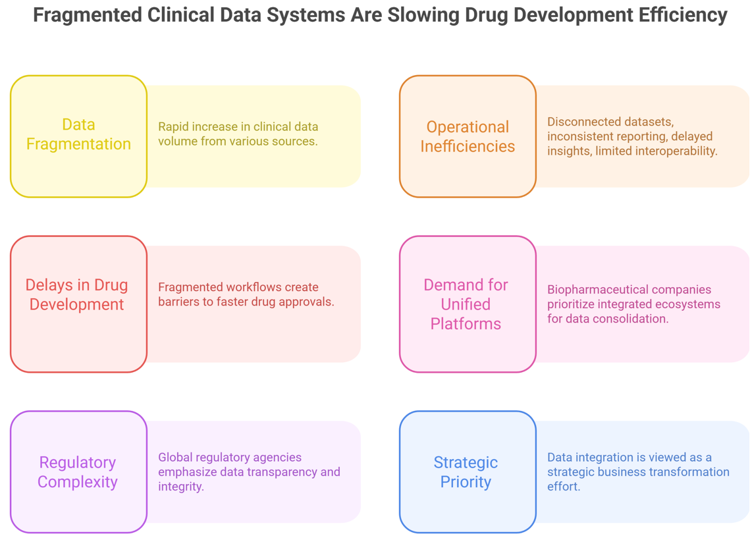
The pharmaceutical and biotechnology sectors are experiencing a rapid increase in clinical data volume generated through decentralized trials, wearable technologies, electronic health records, laboratory systems, imaging platforms, and patient monitoring applications. While these technologies are improving patient engagement and expanding trial accessibility, fragmented clinical data systems continue to create major operational inefficiencies across the drug development lifecycle.
Organizations managing clinical research across multiple platforms often encounter disconnected datasets, inconsistent reporting standards, delayed patient insights, and limited interoperability between systems. These challenges can significantly slow clinical decision-making, extend trial timelines, and increase overall development costs.
According to insights published by Orion Market Research, pharmaceutical companies are increasingly investing in unified clinical data management infrastructure to accelerate operational modernization and improve trial efficiency.
Clinical Data Silos Are Delaying Drug Development Timelines
Clinical trials generate large volumes of structured and unstructured data from various internal and external stakeholders. However, when these systems operate independently without centralized integration, organizations face difficulties in accessing real-time insights.
Key operational challenges linked to fragmented clinical data systems include:
- Delays in patient recruitment and enrollment tracking
- Inconsistent data validation processes
- Increased regulatory compliance risks
- Duplicate data entry across systems
- Slower adverse event reporting
- Limited visibility into trial performance metrics
- High operational costs associated with manual reconciliation
As global trials become increasingly complex, fragmented workflows are creating barriers to faster drug approvals and commercialization strategies.
Demand for Unified Clinical Data Platforms Is Increasing
Biopharmaceutical companies are now prioritizing integrated clinical ecosystems capable of consolidating data from multiple sources into centralized platforms. Modern clinical data management solutions are helping organizations streamline trial monitoring, improve data quality, and support faster analytics-driven decision-making.
Advanced technologies contributing to operational modernization include:
- Artificial intelligence-powered clinical analytics
- Cloud-based clinical data repositories
- Real-time patient monitoring systems
- Interoperable electronic data capture platforms
- Predictive analytics for trial optimization
- Automated regulatory documentation workflows
These innovations are helping sponsors and contract research organizations reduce operational bottlenecks while enhancing collaboration across global trial networks.
Regulatory Complexity Is Accelerating Digital Transformation
Global regulatory agencies are emphasizing stronger data transparency, audit readiness, and patient data integrity standards. As a result, pharmaceutical manufacturers are under increasing pressure to modernize legacy clinical infrastructure.
Integrated clinical data environments can support:
- Faster regulatory submissions
- Improved protocol compliance
- Enhanced pharmacovigilance reporting
- Better patient retention strategies
- More accurate endpoint tracking
- Stronger cybersecurity and governance controls
Organizations adopting unified clinical data strategies are gaining measurable advantages in development speed, operational scalability, and research productivity.
Operational Modernization Is Becoming a Strategic Priority
The growing adoption of decentralized clinical trials and digital therapeutics is further amplifying the need for scalable clinical data management systems. Industry stakeholders are now viewing data integration not only as an IT initiative but also as a strategic business transformation effort.
Pharmaceutical manufacturers investing in centralized data ecosystems are better positioned to:
- Reduce clinical trial cycle times
- Improve collaboration between research teams
- Enhance patient-centric trial execution
- Increase research efficiency
- Accelerate market entry for innovative therapies
Industry experts anticipate continued growth in demand for intelligent clinical data management technologies as organizations seek to improve trial agility and reduce operational complexity.
Emerging Industry Trends
Orion Market Research Clinical Research Insights continues to monitor emerging developments across clinical data management, healthcare IT modernization, and pharmaceutical digital transformation initiatives. The company provides strategic market intelligence, competitive analysis, and future technology trend assessments supporting stakeholders across the global healthcare ecosystem.
Businesses seeking operational modernization strategies are increasingly leveraging data-driven market intelligence to identify investment opportunities, technology adoption patterns, and evolving clinical infrastructure demands.