RFx Drafting for
Complex
Procurement
RFx (Request for Information, Proposal, or Quotation) drafting for industrial, technology, and regulated sectors. Our experts transform complex requirements into watertight procurement documents.
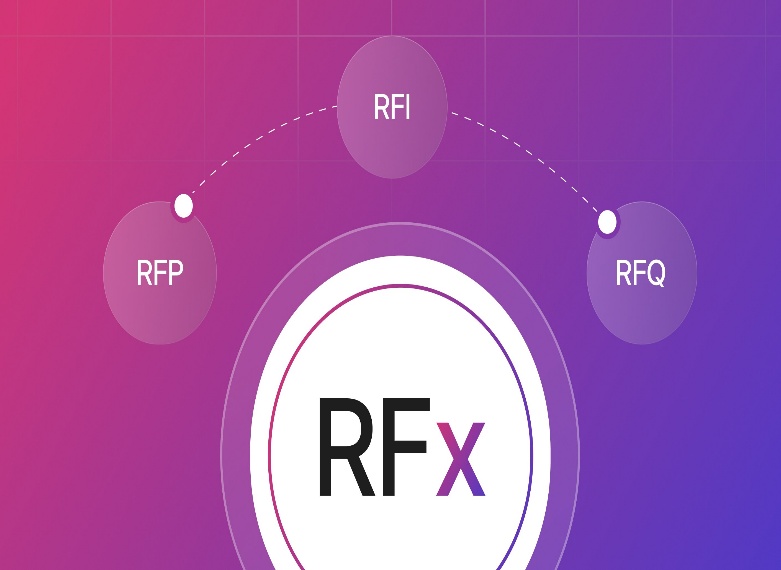
What Is RFx and Why It Matters in Industrial Procurement
RFx (Request for Information, Proposal, or Quotation) is the formal procurement document used to translate internal sourcing intent into supplier-ready requirements. In industrial and technology procurement, RFX quality directly impacts bid comparability, supplier participation, and total cost outcomes. Procurement audits show 30-50% of sourcing delays originate at the requirement-definition stage due to unclear scope, inconsistent technical depth, or weak evaluation structure - making precise RFX drafting a critical control point.
Average cost overrun from unclear RFx requirements and ambiguous scope definition
Typical sourcing delays caused by poor requirement-definition at the RFx stage
Of supplier change requests traced directly to incomplete or vague specifications
Of PPAP rejections linked to insufficient RFQ technical detail and documentation
Our Methodology
We apply a structured RFx-first approach to ensure each RFI, RFP, and RFQ is aligned with its role in the procurement lifecycle. Our process begins with defining clear objectives, scope, and success criteria, followed by mapping the vendor landscape and benchmarking market realities. We develop precise technical specifications and standardized commercial frameworks to enable comparable vendor responses.
A transparent evaluation model ensures objective decision-making, while risk and compliance elements are integrated throughout. The final RFx is delivered as a submission-ready document, refined through stakeholder inputs, ensuring clarity, market alignment, and efficient, defensible procurement outcomes.
View Our Full ProcessDeep Expertise Across Industries
Our analysts specialize in complex technical domains, ensuring your drafting is informed by real-world market intelligence across industrial and technology sectors.
Structured RFx-First Approach
Each document is drafted to its role in the procurement lifecycle — RFI for market intelligence, RFP for solution evaluation, RFQ for price certainty.
Audit-Ready Documentation
Every deliverable is structured for compliance, evaluation defensibility, and procurement audit requirements — embedded from the first draft, not retrofitted.
RFI · RFQ · RFP — What Do You Need?
Structured drafting for every stage of your procurement lifecycle. Select the document that matches your sourcing stage.
RFI is used to reduce uncertainty. It supports supplier market mapping, capability screening, and feasibility assessment.
- Supplier Capability & Maturity Assessment
- Solution Feasibility Analysis
- Market Landscape Insight
RFP enables structured solution comparison. It is critical where delivery methodology, risk allocation, or service levels vary.
- Technical & Functional Solution Fit
- Delivery & Risk Model Evaluation
- Commercial & Contractual Structure
RFQ focuses on price, terms, and delivery certainty. Accurate RFQs improve price transparency and reduce disputes.
- Price & Cost Breakdown Analysis
- Delivery & Logistics Certainty
- Commercial Compliance Drafting
The Difference Is Measurable
We combine deep domain expertise with structured methodology to protect your procurement operations and deliver outcomes that are defensible, compliant, and cost-effective.
Industry-Specific Drafting
Our analysts specialise in complex technical domains — ensuring your RFx is informed by real-world market intelligence, sector compliance, and domain-specific supplier language.
Global Platform
Active across 100+ countries with integration and e-sourcing support for SAP Ariba, Coupa, JAGGAER, Oracle, and CEP — your documents are platform-ready on delivery.
Results-Driven
Our methodology delivers measurable procurement outcomes — reduced cost overruns, faster supplier qualification, lower change-order rates, and award decisions that hold under audit.
Rapid Turnaround
RFI ready in 5–7 days. RFP in 10–15 days. Full RFQ with compliance review in under 21 days — without sacrificing specification quality or evaluation structure.
Cost Optimisation
Well-structured RFx documents reduce supplier pricing risk and ambiguity, enabling apples-to-apples bid comparison and 15–30% reduction in total procurement cost risk.
Compliance Built In
All documents drafted to meet global regulatory requirements — ITAR, CE, ISO, FDA, and industry-specific frameworks embedded into every deliverable from the first draft.
We support these global platforms
Deep Expertise Across Industries
Our analysts specialise in complex technical domains, providing industry-specific RFx drafting expertise across every sector we serve.
AI
RFX drafting for AI sourcing focuses on capability assessment, data governance, security, scalability, and lifecycle risks where requirements and outcomes are often evolving.
Automotive
Automotive RFX documents must manage high supplier volumes, technical specifications, quality standards, cost targets, and long-term supply continuity across complex value chains.
Chemical and Material
Chemical and material sourcing requires precise RFX drafting to define specifications, purity levels, compliance obligations, safety documentation, and contract manufacturing responsibilities.
Electronics and Electrical
RFX drafting supports accurate comparison of components, systems, and services by clearly defining technical tolerances, testing requirements, certifications, and delivery expectations.
Energy and Power
Energy and power procurement depends on RFX documents that address performance guarantees, regulatory compliance, reliability metrics, lifecycle costs, and execution risk.
Food and Beverages
Food and beverage RFX drafting emphasizes quality standards, traceability, regulatory compliance, supply reliability, and consistency across raw materials and processing services.
IT and Telecommunication
IT and telecom RFX documents must clearly define scope, SLAs, security requirements, integration dependencies, and commercial models to ensure comparable and compliant bids.
Healthcare
Healthcare RFX drafting requires clear definition of regulatory compliance, quality standards, patient safety requirements, clinical capabilities, and supply reliability across pharmaceuticals, medical devices, diagnostics, and healthcare services.
Education and Edtech
Education and EdTech procurement programs involve long technology lifecycles, multi-stakeholder governance, regulatory oversight, and operational dependency on uninterrupted learning delivery.
Financial Services and Fintech
Financial services procurement involves high operational, regulatory, cybersecurity, and uptime risk. Financial platforms frequently manage sensitive customer data, real-time transactions, regulatory reporting, and mission-critical decision workflows where procurement failures can create operational disruption, compliance exposure, and financial losses.
Government & Public Sector
Government and public sector procurement programs operate under high regulatory scrutiny, long funding cycles, multi-stakeholder governance structures, and strict accountability requirements.
Building and Construction
Building and construction procurement involves high capital exposure, multi-stakeholder coordination, regulatory oversight, and schedule dependency.
DIY vs. OMR Global — The Difference is Measurable
Procurement leaders consistently underestimate the downstream cost of internally drafted RFx documents. The data tells a different story.
| Dimension | Internal / In-House RFx Drafting | Third-Party Expert (OMR Global) |
|---|---|---|
| Requirement Clarity | High-level, narrative requirements | Precisely bounded, supplier-ready requirements |
| Supplier Interpretation Variance | 20–40% of bids non-comparable due to interpretation gaps | <10% bid variance with standardized response structures |
| Clarification Rounds | 3–6 clarification cycles common | 1–2 cycles due to pre-resolved ambiguities |
| Sourcing Timeline Impact | Adds 2–6 weeks to procurement timelines | Reduces cycle time by 20–35% |
| Bid Quality | Inconsistent depth and structure across vendors | 10–25% improvement in bid quality and completeness |
| Evaluation Framework | Often subjective; weighting unclear or missing | Objective, weighted scoring aligned to approval and audit needs |
| Evaluation Disputes | Frequent internal challenges during shortlisting | 50–70% fewer evaluation disputes |
| Cost Transparency | Hidden buffers due to assumptions and exclusions | 15–30% reduction in total procurement cost risk |
| Post-Award Scope Creep | 10–20% scope expansion after award | <5% scope change post-award |
| Compliance & Audit Risk | Documentation gaps identified late | Audit-ready structure embedded upfront |
| Vendor Neutrality | Language may favor incumbents | Fully neutral, standardized procurement language |
| Internal Effort Required | High coordination load across teams | 30–40% lower internal drafting effort |
| Award Defensibility | Limited justification under scrutiny | Decisions fully traceable and defensible |
Our 5-Step Strategic Process
From briefing to delivery — a structured approach applied to every engagement, every time.
Discovery
Scope alignment, stakeholder briefing, and procurement context mapping to define requirements
Research
Market intelligence, supplier landscape analysis, and regulatory requirement review
Drafting
Full RFI/RFP/RFQ document creation with evaluation criteria and weighted scoring structure
QA
Compliance review, technical accuracy check, and legal alignment across all document sections
Delivery
Platform-ready document with issuing guidance and full bid management support
40%
Faster Procurement Outcomes
500+
Global Projects Delivered
100%
Fully Customised Per Project
98%
Client Satisfaction Rate
Frequently Asked Questions
Everything procurement teams need to know about RFI, RFP, and RFQ documents — when to use them, how to structure them, and how to avoid costly mistakes.
RFP compares technical solutions and delivery approaches.
RFQ focuses strictly on price, terms, and delivery for clearly defined requirements.
RFQs may become binding if accepted and converted into a purchase order or contract.
RFPs: 3–6 qualified suppliers for comparison
RFQs: 3–5 suppliers for competitive pricing
RFI (market understanding) → RFP (solution evaluation) → RFQ (final price negotiation).
RFP: 3–6 weeks
RFQ: 1–2 weeks
Timelines depend on complexity and data requirements.
RFP evaluates solution quality, delivery risk, and commercial structure.
RFQ evaluates price, terms, and delivery certainty.