Green Material Certifications Are Becoming a Competitive Advantage in Industrial Procurement
Rising Importance of Certified Sustainable Materials in Industrial Procurement
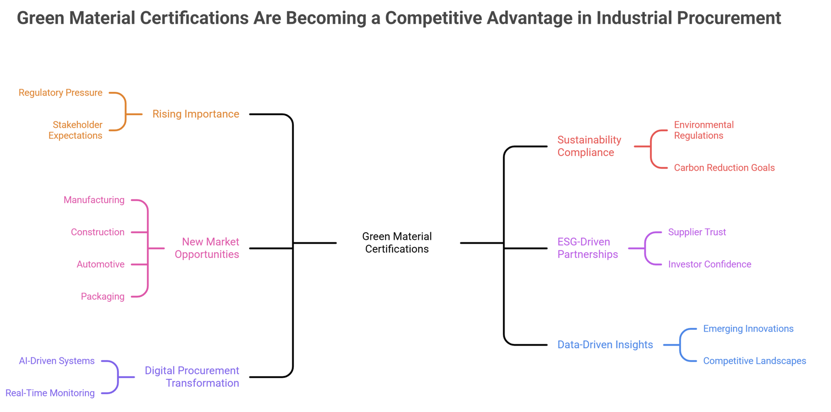
Global industrial procurement strategies are rapidly evolving as sustainability regulations, ESG commitments, and stakeholder expectations reshape supply chain priorities. Across manufacturing, construction, automotive, packaging, chemicals, and energy sectors, green material certifications are emerging as a critical differentiator in supplier selection and procurement decision-making.
Organizations are no longer evaluating suppliers solely on pricing and delivery capabilities. Procurement leaders are increasingly prioritizing certified sustainable materials to ensure regulatory compliance, strengthen environmental performance, reduce carbon footprints, and improve long-term operational resilience. Certifications such as recycled content validation, low-emission material standards, sustainable sourcing credentials, and environmental product declarations are becoming influential benchmarks in procurement frameworks worldwide.
According to industry analysts, the growing focus on sustainable procurement is accelerating investments in environmentally responsible materials and supplier verification systems. Businesses are actively integrating sustainability metrics into procurement scorecards to improve transparency and mitigate environmental risks across global supply chains.
Sustainability Compliance Is Reshaping Supplier Evaluation Models
Environmental compliance requirements are becoming stricter across multiple regions, especially in Europe, North America, and the Asia-Pacific. Industrial buyers are facing increasing pressure to align sourcing strategies with sustainability mandates, carbon reduction goals, and circular economy initiatives.
As a result, procurement departments are using green certifications as measurable indicators of supplier credibility and environmental accountability. Certified materials help organizations:
- Demonstrate compliance with environmental regulations
- Improve ESG reporting accuracy
- Support carbon neutrality initiatives
- Enhance sustainable supply chain visibility
- Reduce reputational and operational risks
- Meet customer sustainability expectations
Industrial enterprises are also leveraging certified sustainable materials to strengthen bid competitiveness in government and large-scale infrastructure contracts, where sustainability compliance has become a mandatory procurement criterion.
Green Certifications Are Creating New Market Opportunities
The increasing demand for environmentally certified materials is opening significant growth opportunities for suppliers and manufacturers capable of meeting sustainability standards. Businesses that adopt certified green materials are positioning themselves as preferred procurement partners in highly competitive industrial markets.
Industries witnessing rapid adoption of certified sustainable materials include:
- Manufacturing and Heavy Industry
Manufacturers are prioritizing recyclable metals, low-carbon polymers, and energy-efficient raw materials to support decarbonization strategies and operational sustainability goals.
- Construction and Infrastructure
Construction procurement teams are emphasizing certified low-emission materials, sustainable concrete alternatives, and environmentally responsible insulation products to align with green building initiatives.
- Automotive and Transportation
Automotive OEMs are increasing procurement of lightweight recyclable materials and sustainably sourced components to support electric vehicle production and regulatory compliance.
- Packaging and Consumer Goods
Sustainable packaging procurement is accelerating as brands seek certified biodegradable, recyclable, and renewable material solutions to meet consumer demand and regulatory requirements.
Procurement Teams Are Prioritizing ESG-Driven Supplier Partnerships
Modern procurement strategies increasingly focus on long-term supplier partnerships that support ESG performance objectives. Certified green materials provide procurement teams with measurable sustainability indicators that improve vendor evaluation and sourcing efficiency.
Companies adopting sustainability-focused procurement models are experiencing several strategic advantages, including:
- Improved supplier trust and transparency
- Enhanced investor confidence
- Stronger regulatory preparedness
- Greater resilience against supply chain disruptions
- Increased brand reputation in sustainability-driven markets
As procurement leaders seek data-backed sourcing decisions, market intelligence and sustainability insights are becoming essential for evaluating supplier capabilities and identifying future procurement trends.
Digital Procurement Transformation Is Accelerating Certification Demand
Digital procurement platforms and AI-driven supplier management systems are making environmental certification data more accessible and actionable. Organizations are increasingly integrating sustainability analytics into procurement software to monitor supplier compliance, emissions data, and environmental certifications in real time.
This transition is encouraging suppliers to adopt globally recognized sustainability certifications to remain competitive within digital procurement ecosystems. Companies lacking transparent sustainability documentation may face reduced visibility in procurement evaluations and supplier shortlisting processes.
Industrial Buyers Are Seeking Data-Driven Sustainability Insights
The growing complexity of sustainability regulations and industrial procurement standards is increasing demand for market intelligence solutions that provide actionable insights into sustainable materials markets, supplier trends, regulatory developments, and emerging procurement technologies.
Research-driven procurement strategies are helping businesses identify:
- Emerging sustainable material innovations
- Regulatory risk factors
- Competitive supplier landscapes
- Future investment opportunities
- Regional sustainability adoption trends
- Procurement optimization strategies
This shift is driving increased interest in specialized industry research and procurement intelligence platforms that support informed sourcing decisions.
Supporting Sustainable Procurement Intelligence
Orion Market Research provides comprehensive market intelligence and industry analysis focused on sustainable materials, industrial procurement trends, ESG compliance developments, and emerging green supply chain opportunities.
The company’s research solutions help organizations evaluate evolving sustainability standards, identify growth opportunities in certified material markets, and develop procurement strategies aligned with environmental compliance objectives.
Businesses across manufacturing, automotive, construction, packaging, and industrial sectors are increasingly leveraging strategic market insights to strengthen supplier evaluation processes and improve sustainable sourcing initiatives.
Why Sustainable Material Intelligence Matters for Future Procurement
As industries continue transitioning toward low-carbon and environmentally responsible operations, green material certifications are expected to play an even greater role in procurement competitiveness. Organizations that proactively align sourcing strategies with sustainability standards will be better positioned to secure long-term supplier relationships, regulatory compliance, and market leadership.
Industrial procurement is entering a new era where sustainability credentials are no longer optional; they are becoming a defining factor in supplier selection, operational resilience, and business growth.
Companies investing in sustainability intelligence, procurement transparency, and certified material adoption are likely to gain a significant competitive advantage in rapidly evolving industrial markets.