Managing High-Volume Supplier Complexity: A Guide to IATF-Compliant RFQ Structures
The increasing complexity of automotive supply chains is pushing OEMs and Tier 1 suppliers to rethink how they manage sourcing events, supplier qualification, and RFQ documentation. As automotive manufacturing shifts toward electrification, connected mobility, and software-defined vehicles, procurement leaders are facing unprecedented pressure to maintain supplier compliance while accelerating sourcing timelines. In this evolving environment, structured and IATF-compliant RFQ frameworks are becoming essential for operational consistency, quality assurance, and supplier risk reduction.
According to Orion Market Research, organizations managing high-volume supplier ecosystems are increasingly prioritizing standardized RFQ structures that align with International Automotive Task Force (IATF) quality management requirements. These frameworks are helping manufacturers improve bid comparability, reduce sourcing delays, and strengthen supplier accountability across global operations.
Rising Supplier Complexity in Automotive Procurement
Automotive sourcing teams today coordinate with hundreds of suppliers across electronics, powertrain systems, lightweight materials, software integration, and precision components. The introduction of EV platforms and advanced driver assistance systems (ADAS) has further increased supplier interdependencies and compliance requirements.
Traditional RFQ documentation often struggles to address:
- Multi-tier supplier qualification tracking
- PPAP and APQP documentation requirements
- Traceability and audit-readiness expectations
- Regional compliance differences
- Capacity validation for high-volume production
- Risk assessment for critical automotive components
Without a structured RFQ process, procurement teams may encounter inconsistent supplier responses, quality non-conformance risks, delayed sourcing cycles, and costly post-award engineering changes.
Why IATF-Compliant RFQ Structures Matter
IATF-aligned RFQ frameworks create a standardized sourcing environment that improves communication between OEMs, procurement managers, engineering teams, and suppliers. These structures ensure that quality expectations are integrated directly into supplier evaluation processes rather than addressed after vendor selection.
Key advantages include:
- Improved Supplier Qualification Accuracy
IATF-compliant RFQs incorporate detailed quality management criteria, certification validation, manufacturing capability assessments, and process control expectations. This helps buyers identify suppliers capable of meeting automotive-grade production requirements.
- Better Bid Comparability
Structured RFQ templates standardize technical specifications, commercial inputs, and compliance requirements, enabling procurement teams to compare suppliers more effectively across cost, quality, delivery, and risk parameters.
- Reduced Production Risks
Clear documentation requirements related to PPAP submissions, control plans, material traceability, and corrective action processes reduce the likelihood of supplier-related disruptions during mass production.
- Faster Audit and Compliance Readiness
Automotive manufacturers increasingly require sourcing documentation that supports internal audits and regulatory inspections. IATF-focused RFQ structures improve documentation consistency and traceability across sourcing programs.
Best Practices for Managing High-Volume Supplier RFQs
Industry experts recommend several best practices for organizations managing complex automotive sourcing initiatives:
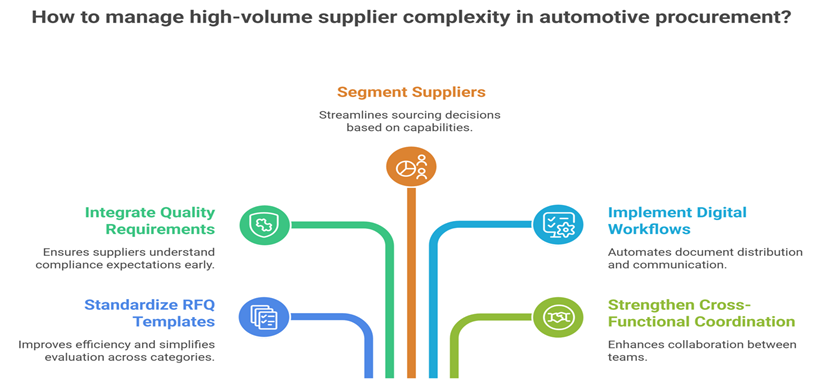
- Standardize RFQ Templates Across Categories
Using unified RFQ structures across electronics, metal components, plastics, assemblies, and software suppliers improves sourcing efficiency and simplifies evaluation processes.
- Integrate Quality Requirements Early
Embedding APQP, FMEA, SPC, and traceability requirements directly into RFQ documentation ensures suppliers understand compliance expectations from the beginning of the sourcing cycle.
- Segment Suppliers by Capability
Categorizing suppliers based on manufacturing maturity, geographic reach, tooling capability, and quality certifications allows procurement teams to streamline sourcing decisions.
- Implement Digital Collaboration Workflows
Digital RFQ management systems help procurement teams automate document distribution, supplier communication, revision tracking, and response analysis.
- Strengthen Cross-Functional Coordination
Successful automotive RFQ strategies require collaboration between procurement, quality assurance, engineering, manufacturing, and supplier development teams.
The Growing Role of Data-Driven Automotive Sourcing
Modern automotive procurement strategies increasingly rely on market intelligence, supplier benchmarking, and sourcing analytics to improve RFQ outcomes. Procurement leaders are leveraging industry insights to evaluate supplier capacity trends, cost structures, regional manufacturing shifts, and compliance readiness.
Orion Market Research supports organizations with industry-focused market intelligence, procurement trend analysis, supplier ecosystem insights, and automotive sector research that help businesses optimize sourcing strategies and strengthen supplier management frameworks.
As automotive supply chains continue evolving, companies adopting structured and IATF-compliant RFQ methodologies are expected to gain significant advantages in supplier reliability, sourcing agility, and long-term operational resilience.