Regulatory Complexity Is Increasing Procurement Pressure on Medical Device Suppliers
Evolving Regulatory Demands Are Reshaping Medical Device Procurement
The global medical device industry is entering a new era of compliance-driven procurement as evolving regulatory frameworks continue to increase operational pressure on manufacturers, suppliers, and healthcare procurement teams. From stricter quality documentation requirements to regional certification mandates and post-market surveillance obligations, medical device suppliers are now expected to demonstrate higher levels of regulatory transparency than ever before.
Industry analysts at Orion Market Research observe that procurement decisions in the MedTech sector are increasingly influenced by regulatory readiness, audit preparedness, traceability capabilities, and supplier risk management practices. As healthcare systems worldwide prioritize patient safety and compliance accountability, procurement departments are shifting their focus from cost-based sourcing toward long-term regulatory reliability.
This trend is creating substantial opportunities for suppliers that can align with changing international standards while maintaining operational resilience across global supply chains.
Regulatory Complexity Is Becoming a Strategic Procurement Challenge
Medical device procurement teams are facing mounting challenges due to overlapping global regulations, changing compliance standards, and growing documentation requirements. Regulatory agencies across major markets are implementing tighter oversight policies related to product approvals, manufacturing quality, cybersecurity, labelling, and supplier accountability.
These developments are increasing pressure on medical device suppliers to:
- Maintain continuous compliance across multiple jurisdictions
- Improve supplier documentation and traceability systems
- Reduce delays associated with regulatory approvals
- Strengthen post-market surveillance capabilities
- Ensure transparency across raw material and component sourcing
- Adapt rapidly to evolving regional regulatory policies
As procurement cycles become increasingly compliance-centric, suppliers unable to meet evolving regulatory expectations may experience delays in vendor approvals, contract renewals, and procurement partnerships.
Compliance Readiness Is Emerging as a Competitive Differentiator
Healthcare providers and procurement leaders are increasingly prioritizing suppliers that can demonstrate strong regulatory governance frameworks. Compliance readiness is no longer viewed solely as a legal requirement; it is becoming a critical competitive differentiator within the global medical device market.
Organizations with advanced regulatory intelligence systems, digital quality management platforms, and proactive compliance monitoring strategies are gaining stronger positioning in procurement evaluations.
According to market observations from Orion Market Research, procurement teams are now evaluating suppliers based on several compliance-focused indicators, including:
- Regulatory audit history
- Certification management efficiency
- Product traceability infrastructure
- Cybersecurity compliance
- Risk mitigation frameworks
- Documentation automation capabilities
- Regional regulatory adaptability
This shift is accelerating investment in regulatory technology solutions and compliance-driven supply chain modernization across the MedTech ecosystem.
Digital Transformation Is Supporting Regulatory Procurement Efficiency
The increasing complexity of medical device regulations is also driving broader digital transformation initiatives within procurement and supplier management operations.
Medical device manufacturers are adopting technologies such as AI-powered compliance analytics, cloud-based documentation systems, automated audit tracking tools, and predictive risk management platforms to strengthen procurement efficiency and regulatory oversight.
Digital procurement systems are helping organizations:
- Streamline supplier qualification processes
- Monitor compliance performance in real time
- Improve regulatory reporting accuracy
- Accelerate documentation verification
- Reduce procurement delays caused by manual compliance reviews
As regulatory expectations continue to evolve, digital compliance infrastructure is expected to play a central role in future procurement strategies.
Global Supply Chain Risks Are Intensifying Compliance Pressures
The medical device sector continues to face supply chain disruptions influenced by geopolitical uncertainty, changing trade policies, raw material shortages, and regional manufacturing dependencies. These disruptions are increasing the need for procurement teams to establish stronger supplier diversification and compliance monitoring strategies.
Procurement leaders are now expected to balance operational continuity with regulatory assurance, particularly in highly regulated healthcare environments where supply interruptions can directly impact patient care.
As a result, medical device companies are increasingly seeking market intelligence and regulatory forecasting insights to better understand supplier risks, regional policy developments, and procurement trends.
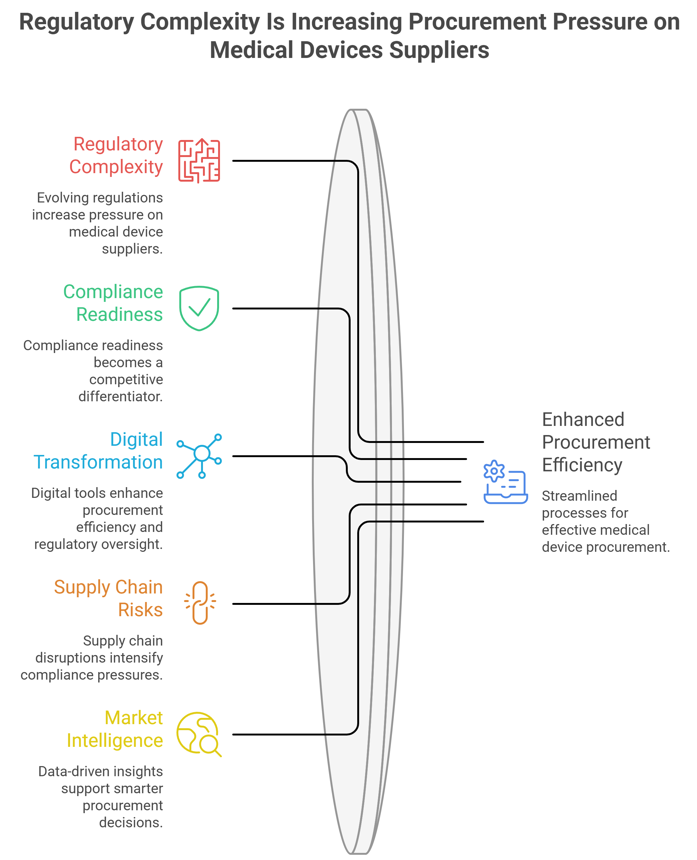
Market Intelligence Is Supporting Smarter Procurement Decisions
The growing intersection of compliance and procurement is increasing demand for data-driven market intelligence solutions within the healthcare and MedTech industries.
Research-driven insights are helping organizations:
- Identify emerging regulatory trends
- Benchmark supplier compliance performance
- Evaluate regional market risks
- Assess procurement technology adoption
- Understand future regulatory investment opportunities
Orion Market Research continues to support healthcare organizations, investors, procurement leaders, and medical device manufacturers with strategic market intelligence across medical technologies, healthcare compliance systems, regulatory software solutions, and procurement transformation trends.