Technical Tolerances and Regulatory Safety: The Core Pillars of Chemical RFX Drafting
The global chemical and material procurement landscape is evolving rapidly as manufacturers, distributors, and industrial buyers face increasing pressure to maintain product quality, operational safety, and regulatory compliance across complex supply chains. In this environment, developing a well-structured Request for Proposal (RFP), Request for Quotation (RFQ), or Request for Information (RFI) document has become a strategic necessity rather than an administrative task. According to Orion Market Research, technical tolerances and regulatory safety specifications now represent the foundational pillars of effective chemical RFX drafting, especially in industries such as specialty chemicals, petrochemicals, polymers, coatings, adhesives, industrial gases, and advanced materials.
Chemical procurement teams are increasingly recognizing that vague specifications and incomplete compliance documentation can lead to supplier disputes, product inconsistencies, production downtime, environmental risks, and costly regulatory penalties. As a result, organizations are shifting toward precision-driven RFX frameworks that clearly define chemical composition tolerances, impurity thresholds, material performance expectations, storage conditions, transport classifications, and global regulatory obligations.
Why Technical Tolerances Matter in Chemical Procurement
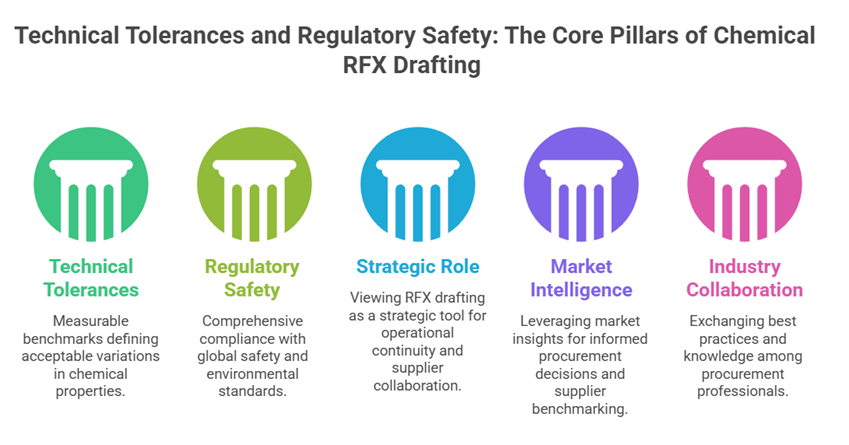
Technical tolerances serve as measurable benchmarks that define acceptable variations in chemical properties and product performance. In modern chemical sourcing environments, procurement leaders are demanding greater clarity around parameters such as:
- Purity levels and concentration ranges
- Moisture content and viscosity limits
- Thermal stability and flash points
- Particle size distribution
- Shelf-life and storage stability
- Hazardous substance thresholds
- Batch-to-batch consistency requirements
Without clearly documented tolerances in RFQ and RFP documentation, suppliers may interpret specifications differently, resulting in inconsistent product quality and operational disruptions. Industries such as pharmaceuticals, automotive coatings, electronics manufacturing, agrochemicals, and food-grade materials are particularly vulnerable to such inconsistencies due to strict downstream performance requirements.
Industry experts at Orion Market Research emphasize that detailed tolerance mapping within chemical RFX documentation improves supplier comparability, accelerates vendor qualification, and significantly reduces procurement risk during commercial negotiations.
Regulatory Safety Compliance Is Reshaping Chemical RFX Structures
Global regulatory frameworks are becoming more stringent across the chemical and material sector. Procurement and sourcing teams must now incorporate comprehensive compliance language into every stage of supplier evaluation. Modern chemical RFX documents increasingly include references to:
- GHS (Globally Harmonized System) classifications
- REACH compliance standards
- OSHA chemical handling regulations
- SDS/MSDS documentation requirements
- Environmental emission controls
- Toxic substance declarations
- Packaging and transportation safety certifications
- RoHS and hazardous material restrictions
Failure to address these requirements during the RFX drafting phase can expose organizations to substantial legal, operational, and reputational risks. Regulatory alignment is especially critical when sourcing chemicals across multiple international jurisdictions where compliance standards differ significantly.
As industrial buyers seek greater transparency across chemical supply chains, sourcing professionals are also prioritizing supplier audit capabilities, traceability systems, sustainability disclosures, and ESG reporting standards within procurement documentation.
Strategic Role of Structured Chemical RFX Drafting
Well-designed chemical RFX frameworks are now being viewed as strategic business tools that support operational continuity, safety assurance, and long-term supplier collaboration. Procurement teams are moving beyond price-focused sourcing models toward data-driven supplier evaluation methodologies that incorporate technical validation and regulatory scoring systems.
Key components of advanced chemical RFX drafting now include:
- Multi-tier supplier qualification criteria
- Technical deviation reporting structures
- Mandatory compliance documentation matrices
- Risk mitigation questionnaires
- Product testing and validation protocols
- Incident response and safety escalation procedures
- Logistics and hazardous handling requirements
These practices help organizations minimize ambiguity while creating standardized procurement workflows that improve sourcing efficiency and supplier accountability.
Growing Industry Demand for Regulatory Intelligence and Market Insights
The increasing complexity of chemical sourcing is driving demand for market intelligence providers capable of delivering actionable procurement insights, supplier benchmarking, regulatory trend analysis, and sourcing strategy support. Through its industry-focused research and consulting capabilities, Orion Market Research continues to support organizations operating across chemical and material industries with data-backed intelligence designed to strengthen procurement planning and supplier decision-making.
From specialty chemicals and industrial solvents to advanced polymers and performance materials, companies are leveraging market research insights to better understand supplier ecosystems, pricing dynamics, compliance trends, technological advancements, and regional regulatory developments.
Industry Collaboration and Knowledge Sharing Continue to Expand
Chemical sourcing professionals are increasingly participating in procurement forums, industrial compliance communities, and sector-specific knowledge platforms to exchange best practices around technical specifications and regulatory governance. Discussions surrounding chemical RFQ optimization, supplier risk reduction, and safety-driven procurement models are gaining traction across industrial sourcing communities and professional networks.
This growing industry engagement is expected to further accelerate the adoption of standardized RFX drafting methodologies focused on transparency, traceability, and operational resilience.
As procurement complexity continues to rise across the global chemical and material sector, organizations that prioritize technically accurate and regulation-focused RFX documentation will be better positioned to improve supplier performance, reduce compliance exposure, and build more resilient sourcing strategies.