Zero-Trust Procurement Is Emerging as the New Standard for Enterprise Security
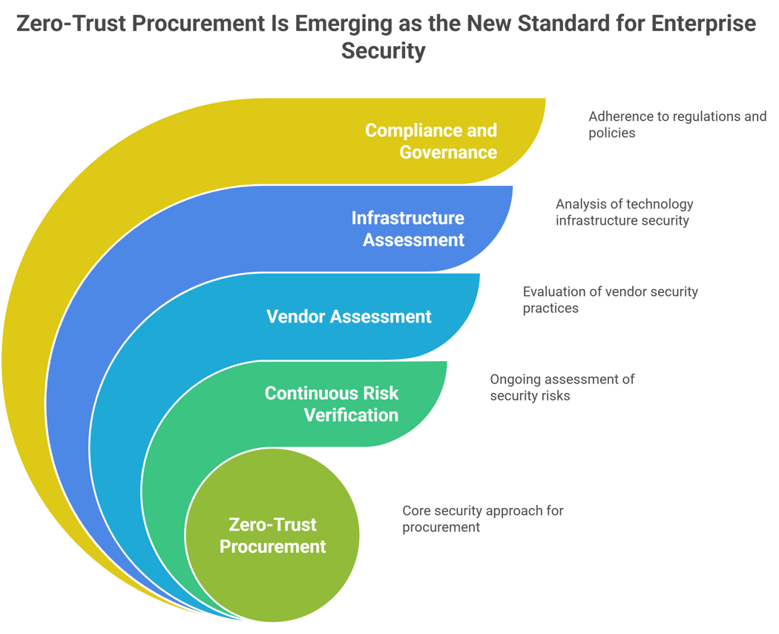
As cyberattacks become more sophisticated and enterprise infrastructures grow increasingly distributed, organizations are rethinking how security decisions are made long before deployment begins. Security leaders are now recognizing that procurement itself has become a critical layer of cyber defense. This shift is driving the rise of Zero-Trust Procurement, a procurement-first security approach that evaluates every technology investment, vendor interaction, software integration, and infrastructure dependency through a continuous risk-verification framework.
Industry analysts observe that enterprises are no longer limiting zero-trust principles to network access management or endpoint authentication. Instead, businesses are extending zero-trust architecture into sourcing decisions, procurement governance, third-party onboarding, cloud infrastructure acquisition, SaaS adoption, and AI platform selection. As digital ecosystems become more interconnected, procurement vulnerabilities are increasingly viewed as enterprise-wide attack surfaces.
Why Procurement Is Becoming a Cybersecurity Priority
Modern enterprise procurement environments involve hundreds of vendors, APIs, cloud platforms, managed service providers, AI tools, and external data-sharing ecosystems. Each procurement decision introduces potential exposure points that can impact operational continuity, regulatory compliance, and long-term resilience.
Traditional procurement models often prioritize pricing efficiency and implementation speed while overlooking deeper security validation requirements. However, recent ransomware incidents, supply chain compromises, insider threats, and third-party breaches have highlighted the growing risks associated with insufficient procurement scrutiny.
Organizations are now shifting toward procurement frameworks that incorporate:
- Continuous vendor verification
- Real-time risk scoring
- Supply chain transparency
- Identity-centric access validation
- Compliance-driven sourcing evaluation
- Multi-layered infrastructure assessment
- AI governance and data protection controls
- Security-by-design procurement standards
This evolution is positioning procurement teams as active contributors to enterprise cyber resilience rather than administrative sourcing functions.
The Rise of Security-Led Procurement Models
Cybersecurity procurement is rapidly evolving from reactive approval processes into proactive risk-governance systems. Security leaders are increasingly collaborating with procurement departments, legal teams, compliance officers, cloud architects, and enterprise risk managers to establish standardized procurement intelligence frameworks.
Under zero-trust procurement models, organizations assess vendors based on multiple security dimensions, including:
- Architecture transparency
- Data residency compliance
- Access control maturity
- Incident response readiness
- Encryption standards
- Identity and privilege management
- Vulnerability disclosure practices
- Third-party dependency exposure
- AI model governance
- Regulatory alignment
This transition reflects broader enterprise recognition that procurement decisions directly influence attack surface expansion.
Third-Party Risk Exposure Is Accelerating
One of the major drivers behind zero-trust procurement adoption is the increasing frequency of third-party cyber incidents. Enterprises now operate within deeply interconnected vendor ecosystems where a single compromised supplier can trigger operational disruption across entire business networks.
Cloud migration, remote workforce expansion, API-driven integration models, and AI adoption have significantly increased dependency on external technology providers. As a result, procurement teams are under growing pressure to validate not only vendor capabilities but also long-term security sustainability.
Security-conscious enterprises are beginning to prioritize procurement partners capable of delivering highly detailed procurement specifications, infrastructure risk analysis, and governance-aligned sourcing frameworks.
Procurement Intelligence Is Becoming a Competitive Requirement
As cybersecurity spending continues to rise globally, enterprises are demanding greater procurement clarity before approving large-scale infrastructure investments. Organizations are increasingly seeking research-backed procurement intelligence to support strategic decision-making across:
- Cloud security investments
- Identity and access management platforms
- AI governance systems
- Endpoint security modernization
- Managed detection and response solutions
- Zero-trust architecture implementation
- Data protection infrastructure
- Security automation ecosystems
This shift is creating strong demand for market intelligence firms capable of supporting procurement precision through deep industry analysis, vendor benchmarking, technology evaluation, and strategic procurement insights.
Enterprise Security Teams Are Prioritizing Procurement Governance
Cybersecurity governance is no longer limited to IT departments. Boards, audit committees, compliance teams, and executive leadership are increasingly evaluating procurement maturity as part of broader enterprise risk management strategies.
Organizations implementing zero-trust procurement strategies are seeing benefits such as:
- Improved vendor accountability
- Reduced procurement-related vulnerabilities
- Stronger compliance readiness
- Faster incident containment capabilities
- Better cross-functional governance alignment
- Enhanced supply chain visibility
- Greater infrastructure resilience
- More secure digital transformation initiatives
These advantages are driving long-term investment in procurement modernization initiatives across multiple industries, including BFSI, healthcare, government, manufacturing, telecom, retail, and energy.
The Future of Zero-Trust Procurement
As enterprises continue accelerating cloud transformation, AI integration, automation adoption, and hybrid infrastructure deployment, procurement governance is expected to become one of the most influential pillars of cybersecurity strategy.
Industry experts believe future procurement models will increasingly rely on:
- AI-assisted vendor risk intelligence
- Predictive procurement analytics
- Automated compliance validation
- Real-time cyber risk scoring
- Security-centric sourcing automation
- Continuous trust verification systems
- Integrated procurement governance platforms
Organizations that fail to modernize procurement security frameworks may face growing exposure to operational disruptions, regulatory penalties, financial losses, and reputational damage.
Supporting Security-Driven Procurement Intelligence
Orion Market Research continues to analyze emerging enterprise cybersecurity trends, procurement modernization strategies, and zero-trust infrastructure developments shaping the future of digital risk management. The company provides research-driven market intelligence designed to help enterprises, technology providers, investors, and procurement leaders make informed strategic decisions within rapidly evolving cybersecurity ecosystems.
Businesses seeking deeper insights into cybersecurity procurement trends, vendor intelligence, enterprise risk governance, and zero-trust market developments are increasingly leveraging research-backed procurement analysis to improve sourcing precision and strengthen long-term operational resilience.
For industry discussions, procurement intelligence insights, cybersecurity trend analysis, and enterprise security research updates, readers can explore the latest resources and market coverage available through Orion Market Research Insights Hub.