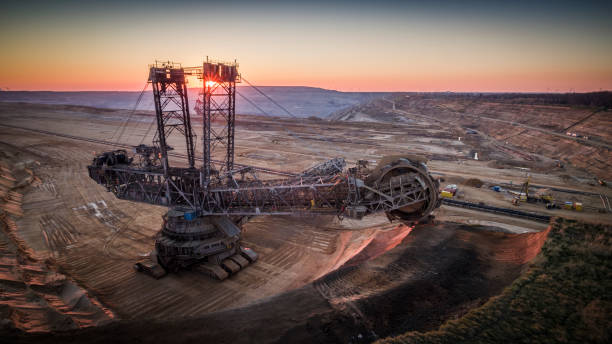
India is blessed with rich mineral wealth of fuels and yielding up to 95 minerals, of which 4 are fuel, 10 metallic, 23 non-metallic, 3 atomic, and 55 minor (including construction and other materials) minerals, India's metals and mining industry is a strategic location and one of the key sectors for the nation's growth and development. With 1,319 mines functioning in the nation, Madhya Pradesh, followed by Gujarat, Karnataka, Odisha, Chhattisgarh, Andhra Pradesh, Rajasthan, Tamil Nadu, Maharashtra, Jharkhand, and Telangana, have the major share of mines. Driving its journey for sustainable development and self-reliance in the field, Indian coal production achieved a phenomenal milestone, crossing 900 Million Tons at the starting of March 2024, boosting power production in India through the 70% contribution of Thermal Power Plants.
According to the Ministry of Statistics and Programme Implementation (MOSPI), India's mining GDP has grown from Rs. 76,877 crore ($9.25 billion) in the third quarter of FY23 to Rs. 82,680 crore ($9.95 billion) in the third quarter of FY24.
India is undergoing a construction boom fueled by an increasing housing economy and major government infrastructure investments. The nation is projected to become the third-largest construction market in the world, following China and the US, by 2025.
Several government initiatives have supported the growth of the sector. The Pradhan Mantri Urja Ganga Yojana focuses on enhancing energy security by developing natural gas pipelines, while the Mineral Exploration Policy encourages exploration and extraction of new minerals. In 2024, the Union Cabinet approved the amendment to the Mines and Minerals (Development and Regulation) Act, 1957, stating royalty rates for 12 critical minerals, thus finishing the rationalization process for all 24 strategic minerals. This move objective is to streamline the mining sector and auction processes, supported by recent amendments to the MMDR Amendment Act, 2023.
Why Metals & Mining?
Robust Demand
India is the world's third-largest energy-consuming nation. There is always a growing demand for electricity and power in the nation, and therefore, this raises the demand for coal. The demand for steel is expected to grow by 10% as the government’s high interest in infrastructural development continues with expanded construction of railways, roads, airports, and others.
Competitive Advantage
India positions itself as a key supplier to national and international markets, giving it a competitive advantage in the international mining landscape. India possesses an advantage in production cost and conversion cost in steel and aluminum. The total number of reporting mines in India as of FY22 was projected to be 1,319, of which metallic minerals mines were anticipated to be 545 and non-metallic minerals mines to be 775.
Policy Support
The government has executed some supportive policies, such as the enactment of the Mines and Minerals Amendment Act, 2021 allowed captive mine owners (other than atomic minerals) to sell up to 50% mineral production yearly in the open market. Additionally, in December 2023, the Ministry of Mines suggested capping performance security and upfront amounts for mining critical minerals to encourage more bidders, reduce entry barriers to participation in auctions, and accelerate the process for mining leases.
Opportunities
The metals and mining industry provides several opportunities for growth, mainly in the development of new mining technologies, exploration of untapped resources, and production of minerals for the EV and renewable energy sectors. Becoming Aatmanirbhar in manufacturing specialty steel, India will move up the steel value chain and reach at par with developed nations of steel making such as Korea and Japan.