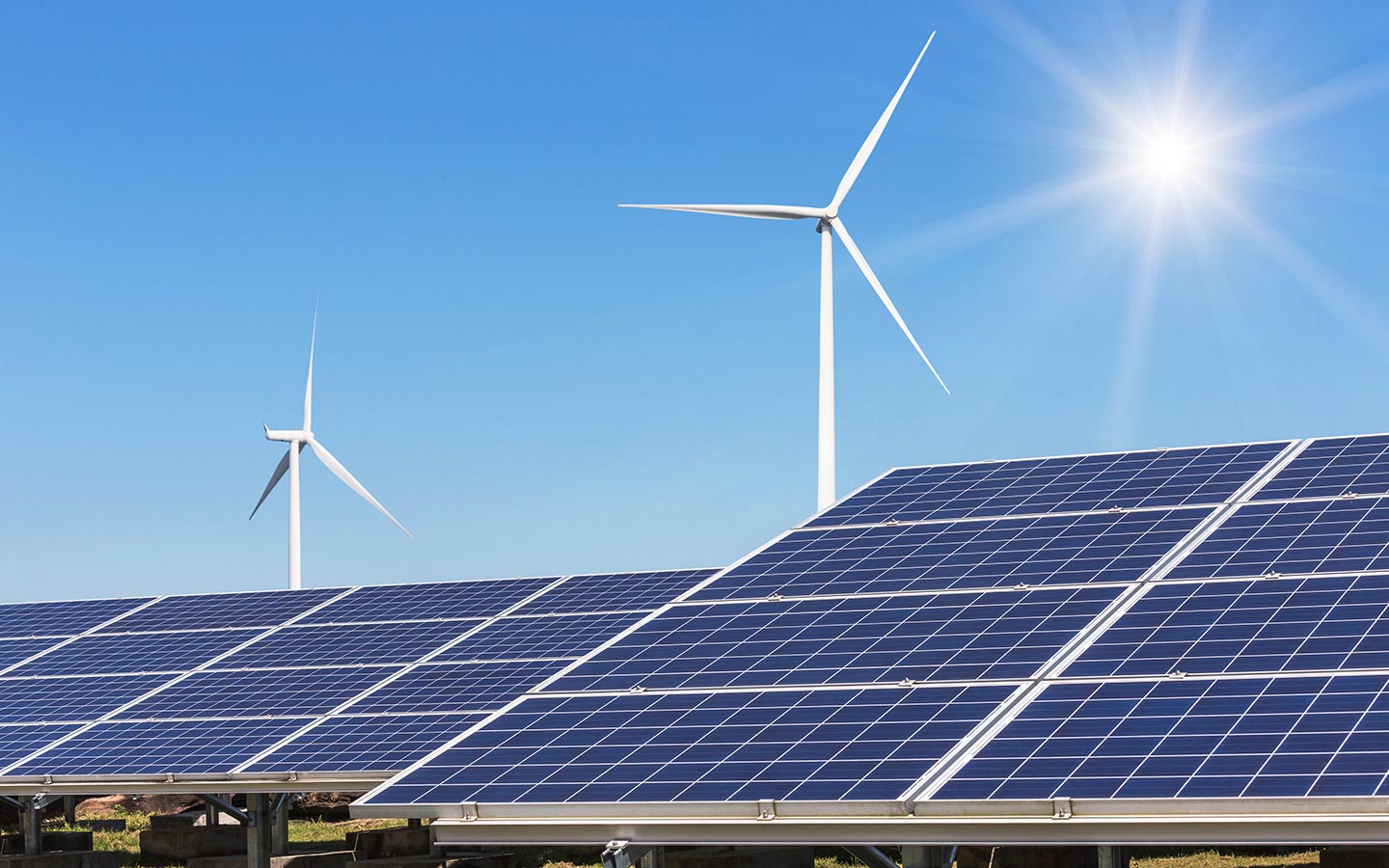
India has made several developments in diversifying its energy mix, gradually declining its dependence on conventional fossil fuels, and setting a better target at the COP26 of 500 GW of non-fossil fuel-based energy by 2030. In India, the installed non-fossil fuel capacity has risen 396% in the last 8.5 years and positions at more than 205.52 GW (including large hydro and nuclear), around 42% of the nation’s total capacity (as of November 2024).
The Government of India doubled funding for the National Green Hydrogen Mission, in the Interim Budget for 2024-2025, and allocated Rs. 600 crores ($72 million). Moreover, Rs. 17,490 crores ($2.10 billion) were assigned for the Green Hydrogen Mission and the Strategic Interventions for Green Hydrogen Transition (SIGHT) Programme, while highlighting a commitment to sustainable energy transition.
According to the facts released by the Department for Promotion of Industry and Internal Trade (DPIIT), the non-conventional energy space in India has become very attractive for investors and received a Foreign Direct Investment (FDI) inflow of $15.36 billion during April 2000 to September 2023. Bharat Petroleum Corporation Limited (BPCL) also plans $1.19 billion (Rs. 10,029 crore) for green energy, aiming 2 GW by 2025, 10 GW by 2035, and 7,000 EV chargers in five years.
Indian government has made some initiatives, such as the development of solar parks, under which 50 solar parks across 12 states have been approved with capacities of 500 MW or more. Sustainable Alternative Towards Affordable Transportation (SATAT) has also launched as an initiative to set up a Compressed Bio-Gas (CBG) production plant and make CBG accessible in the market for usage in automotive fuels. The 100 Smart City project also contains a mandatory provision of roof-top solar for new construction and a 10% renewable energy provision for end-users. The shift towards renewable energy, therefore involves a focal point towards the renewable energy segment, which has the potential to create various job opportunities and lead the world to inclusive growth.
Robust Demand
India's rising demand for energy, is driven by its growing industrial base, urbanization, and increasing population, which makes renewable energy a serious component of the country’s energy strategy. The Ministry of New and Renewable Energy aims 500 GW non-fossil-based electricity generation by 2030, as per the Prime Minister's COP26 announcement, with an additional installation of 13.5 GW renewable energy capacity in 2023, consistent to an investment of around Rs. 74,000 crores ($8.90 billion). Additionally, to expand power infrastructure India plans to invest $109.50 billion (Rs. 9,22,866 crore) to meet 458 GW demand by 2032, integrate renewable energy, enhance transmission, and increase energy security, while unlocking vast untapped potential.
Competitive Advantage
India has vast natural resources that provide a competitive edge in renewable energy production. India was also ranked fourth in solar power capacity and wind power capacity, and similarly in renewable energy installed capacity, as of 2023. India exceeds the global average in reducing and setting carbon emission targets, ranking globally among the top three countries for decreasing efforts and emission reporting.
Policy Support
The Rajasthan government signed an Memorandum Of Understanding (MOU) with NTPC Green Energy for 28,500 MW of renewable energy-based projects, as part of the total 31,825 MW of power generation projects worth Rs. 1.6 lakh crore ($19.18 billion). Additionally, the PM-KUSUM scheme, launched in March 2019 and scaled up in January 2024, purposes to enhance energy and water security for farmers by allowing them to set up solar power plants, install standalone solar agriculture pumps, and solarize grid-connected agriculture pumps, with important financial assistance from the government.
Increasing Investments
Indian corporations plan to invest $800 billion (Rs. 67,42,400 crore) in green hydrogen, semiconductors, clean energy, and EVs. According to Investment Information and Credit Rating Agency (ICRA) the installed renewable energy capacity in India is projected to rise to about 170 GW by March 2025 from the level of 136.57 GW as of December 2023.