Crop Protection Chemicals Market


Crop Protection Chemicals Market Size, Share & Trends Analysis Report by Product (Herbicides, Fungicides, Insecticides, and Biopesticides) by Source (Synthetic, and Natural) by Crop Type (Cereal and Grains, Fruits and Vegetables, Oilseed, and Pulses), By Form (Liquid, and Dry) and by Application (Foliar Spray, Seed Treatment, Soil Treatment, and Post-Harvest) Forecast Period (2025-2035)
Industry Overview
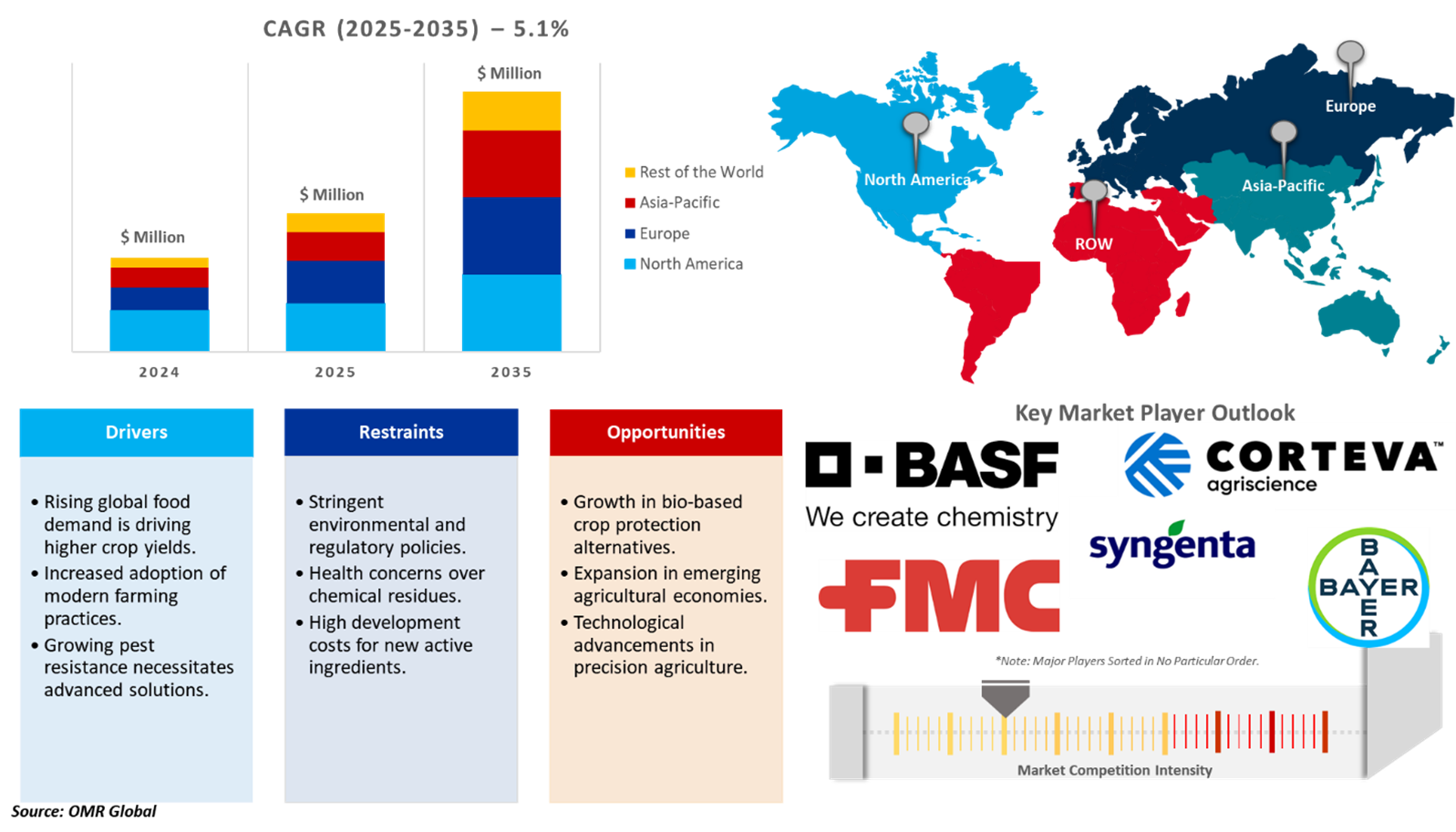
Crop protection chemicals market was valued at $67,780 million in 2024 and is projected to reach $117,144 million by 2035, growing at a CAGR of 5.1% during the forecast period (2025–2035). Technological advancements, such as bio-based and AI-enabled precision spraying tools, are enhancing the effectiveness and efficiency of crop protection chemicals, driving market growth. For instance, in May 2025, BASF introduced two crop protection solutions, Valexio Insecticide and Mibelya Fungicide, to support India's rice production and resilience. Valexio is a next-generation insecticide designed specifically for rice, targeting all damaging life stages of the rice hopper and offering long-lasting residual control. Mibelya is an advanced fungicide for disease management, providing timely and targeted protection against sheath blight and dirty panicle. Both solutions aim to help rice farmers increase yields while effectively managing pests and diseases.
Market Dynamics
Growing Food Demand & Limited Arable Land
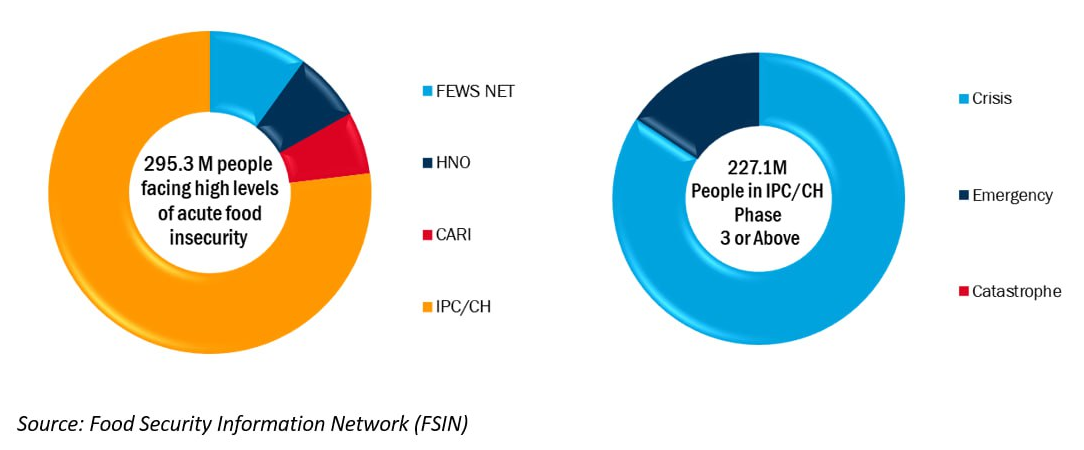
Global food demand necessitates increased agricultural yields, while decreasing arable land per capita necessitates intensified farming and crop protection, driving market growth. According to the Food Security Information Network (FSIN), in 2025, global food demand is increasing owing to population growth and rising incomes, with an estimated 295.3 million people facing food crises in 53 countries. Meanwhile, humanitarian funding for food crises is anticipated to decline, which may affect nutrition services for millions of children.
Climate Change and Weather Extremes
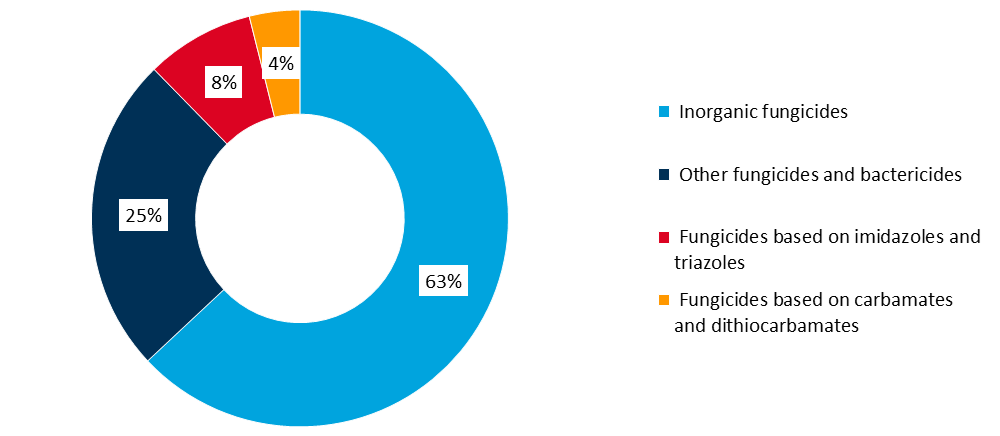
Climate change and weather extremes are causing pest and pathogen spread, necessitating more frequent and diverse pesticide applications, driving market growth. For instance, in 2023, the European Union recorded approximately 292,000 tonnes of pesticides sold across member states. The primary categories contributing to overall sales volumes were fungicides and bactericides, accounting for 39% of total sales, followed by herbicides, haulm destructors, and moss killers at 36%, and insecticides and acaricides comprising 17%. Among EU member states, France represented the largest share of pesticide sales with 23%, followed by Spain at 18%, and Germany and Italy, each contributing 14%. These countries are also recognized as the leading agricultural producers within the region, underscoring the correlation between agricultural output and crop protection chemical demand. Between 2011 and 2023, variations in pesticide sales volumes were observed across the EU. Notably, five member states experienced an increase in pesticide sales, with the most significant growth recorded in Latvia (+55%), Austria (+52%), and Lithuania (+11%). These trends reflect evolving agricultural practices and differing national strategies in pest and disease management across the European Union.
Sales of Categories of ‘Fungicides And Bactericides’ (% Share of Total ‘Fungicides And Bactericides’, Eu, 2023)
Market Segmentation
- Based on the product, the market is segmented into herbicides, fungicides, insecticides, and biopesticides.
- Based on the source, the market is segmented into synthetic and natural.
- Based on the crop type, the market is segmented into cereal and grains, fruits and vegetables, oilseed, and pulses.
- Based on the form, the market is segmented into liquid and dry.
- Based on the crop type, the market is segmented into foliar spray, seed treatment, soil treatment, and post-harvest.
Herbicides: A Key Segment in Market Growth
The global trend towards direct-seeded rice methods and precision agriculture is boosting the demand for targeted, early-acting herbicides. For instance, in June 2025, Crystal Crop Protection Ltd launched RICEACT herbicide for paddy and JIVORA insecticide for cotton, aiming to increase its herbicide and insecticide portfolio by 8% and 7% respectively. RICEACT, an early post-emergence herbicide, effectively controls various weeds in transplanted and wet direct-seeded paddy crops.
Regional Outlook
The global crop protection chemicals is further divided by region, including North America (the US and Canada), Europe (the UK, Germany, France, Italy, Spain, Russia, and the Rest of Europe), Asia-Pacific (India, China, Japan, South Korea, Australia and New Zealand, ASEAN Countries, and the Rest of Asia-Pacific), and the Rest of the World (the Middle East & Africa, and Latin America).
Climate Change and Pest Proliferation In North America
Climate change is causing crop-damaging pests and diseases, necessitating the use of pesticides and fungicides to combat these threats and drive market growth. According to the Food and Agriculture Organization US (FAO), in 2022, the total volume of pesticide use in agriculture reached 3.70 million tonnes (Mt) of active ingredients, reflecting a 4% increase compared to 2021. Over the past decade, pesticide usage rose by 13% increase over the past decade. The global volume of pesticide exports rose by 13%, reaching $48.8 billion, with Asia as the leading exporter. The Americas also saw a 10% increase in pesticide use, highlighting the region's growing reliance on crop protection chemicals to support agricultural productivity. This growth in the crop protection chemicals market is driven by the need to safeguard crop yields and support global food security.
Asia-Pacific Maintains Strong Market Position
Asia-Pacific holds a significant share, owing to the market growth is primarily driven by the shift to organic cultivation is driving a surge in the demand for bio-based crop protection chemicals, including biopesticides, microbial fungicides, and natural repellents. According to the Research Institute of Organic Agriculture FiBL, in 2023, organic agricultural land expanded to over 96.4 million hectares, marking a 26.6 percent increase from 2021, with an additional 20.3 million hectares. This growth is primarily attributed to an increase of 17.3 million hectares in Australia and 2.1 million hectares in India, making organic land 2.0 percent of the total agricultural land. Furthermore, 22 countries now have 10% or more of their farmland dedicated to organic practices, involving 4.5 million producers across 188 countries, along with 34.6 million hectares of non-agricultural areas engaged in organic activities.
Market Players Outlook
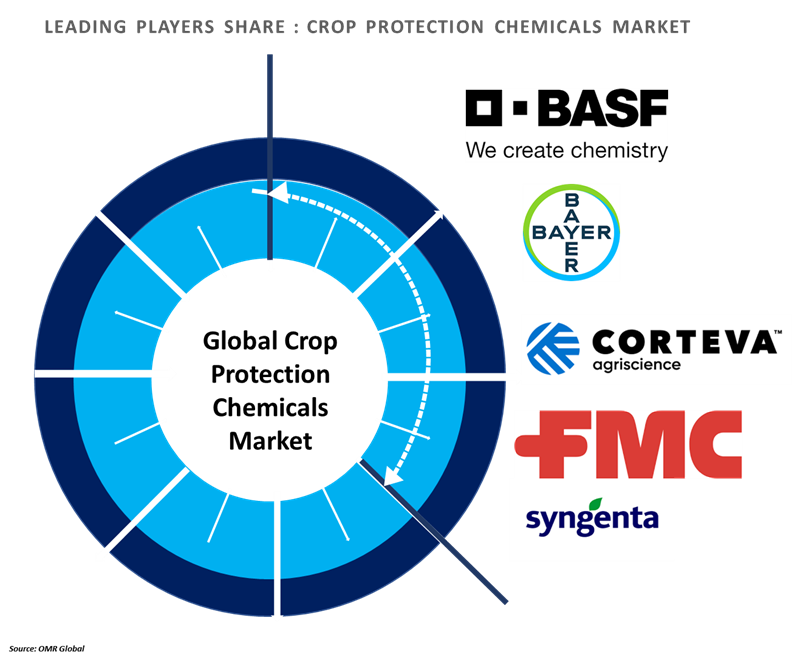
The major companies operating in the global crop protection chemicals market include BASF SE, Bayer AG, Corteva Agriscience, FMC Corp., Syngenta Crop Protection AG, among others. Market players are leveraging partnerships, collaborations, mergers, and acquisition strategies for business expansion and innovative product development to maintain their market positioning.
Recent Developments
- In February 2025, BASF registered Prexio Active, a novel rice insecticide, to manage all four rice hopper species, marking a significant milestone in expanding BASF's global insecticide portfolio and providing sustainable innovations to Asian rice farmers.
- In April 2025, UPL launched Propose, a systemic insecticide for managing caterpillars, thrips, and red spider mites. It contains Chlorantraniliprole + Chlorfenapyr in Suspension Concentrate, offering strong residual activity for immediate and long-lasting protection. Its translocation occurs through the xylem and the translaminar.
- In February 2024, Syngenta Crop Protection, in agricultural innovation, and Lavie Bio Ltd., a subsidiary of Evogene Ltd., partnered for the discovery and development of new biological insecticidal solutions. The collaboration leverages Lavie Bio's unique technology platform to rapidly identify and optimize bio-insecticide candidates, as well as Syngenta’s extensive global research, development, and commercialization capabilities.
- In May 2024, FMC Corp. partnered with AgroSpheres, a biotechnology company pioneering breakthroughs in sustainable crop protection and crop health. The agreement accelerates the discovery and development of novel bioinsecticides, which is a key part of FMC's long-range strategic plan. The agreement aims to bolster FMC's position as the market leader in insecticides and AgroSpheres’ speed to market for its ribonucleic acid (RNA) portfolio by pairing AgroSpheres’ production and formulation technology with FMC’s high-throughput testing, evaluation, and go-to-market capabilities.
The Report Covers
- Market value data analysis of 2024 and forecast to 2035.
- Annualized market revenues ($ million) for each market segment.
- Country-wise analysis of major geographical regions.
- Key companies operating in the global crop protection chemicals market. Based on the availability of data, information related to new products and relevant news is also available in the report.
- Analysis of business strategies by identifying the key market segments positioned for strong growth in the future.
- Analysis of market-entry and market expansion strategies.
- Competitive strategies by identifying ‘who-stands-where’ in the market.
1. Report Summary
• Current Industry Analysis and Growth Potential Outlook
• Global Crop Protection Chemicals Market Sales Analysis – Product | Source | Crop Type | Form | Application ($ Million)
• Crop Protection Chemicals Market Sales Performance of Top Countries
1.1. Research Methodology
• Primary Research Approach
• Secondary Research Approach
1.2. Market Snapshot
2. Market Overview and Insights
2.1. Scope of the Study
2.2. Analyst Insight & Current Market Trends
2.2.1. Key Crop Protection Chemicals Trends
2.2.2. Market Recommendations
3. Market Determinants
3.1. Market Drivers
3.1.1. Drivers For the Global Crop Protection Chemicals Market: Impact Analysis
3.2. Market Pain Points and Challenges
3.2.1. Restraints For Global Crop Protection Chemicals Market: Impact Analysis
3.3. Market Opportunities
4. Competitive Landscape
4.1. Competitive Dashboard – Crop Protection Chemicals Market Revenue and Share by Manufacturers
• Crop Protection Chemicals Product Comparison Analysis
• Top Market Player Ranking Matrix
4.2. Key Company Analysis
4.2.1. BASF SE
4.2.1.1. Overview
4.2.1.2. Product Portfolio
4.2.1.3. Financial Analysis (Subject to Data Availability)
4.2.1.4. SWOT Analysis
4.2.1.5. Business Strategy
4.2.2. Bayer AG
4.2.2.1. Overview
4.2.2.2. Product Portfolio
4.2.2.3. Financial Analysis (Subject to Data Availability)
4.2.2.4. SWOT Analysis
4.2.2.5. Business Strategy
4.2.3. Corteva Agriscience
4.2.3.1. Overview
4.2.3.2. Product Portfolio
4.2.3.3. Financial Analysis (Subject to Data Availability)
4.2.3.4. SWOT Analysis
4.2.3.5. Business Strategy
4.2.4. FMC Corp.
4.2.4.1. Overview
4.2.4.2. Product Portfolio
4.2.4.3. Financial Analysis (Subject to Data Availability)
4.2.4.4. SWOT Analysis
4.2.4.5. Business Strategy
4.2.5. Syngenta Crop Protection AG
4.2.5.1. Overview
4.2.5.2. Product Portfolio
4.2.5.3. Financial Analysis (Subject to Data Availability)
4.2.5.4. SWOT Analysis
4.2.5.5. Business Strategy
4.3. Top Winning Strategies by Market Players
4.3.1. Merger and Acquisition
4.3.2. Product Launch
4.3.3. Partnership And Collaboration
5. Global Crop Protection Chemicals Market Sales Analysis By Product ($ Million)
5.1. Herbicides
5.2. Fungicides
5.3. Insecticides
5.4. Biopesticides
6. Global Crop Protection Chemicals Market Sales Analysis By Source ($ Million)
6.1. Synthetic
6.2. Natural
7. Global Crop Protection Chemicals Market Sales Analysis By Crop Type ($ Million)
7.1. Cereal and Grains
7.2. Fruits and Vegetables
7.3. Oilseed
7.4. Pulses
8. Global Crop Protection Chemicals Market Sales Analysis By Form ($ Million)
8.1. Liquid
8.2. Dry
9. Global Crop Protection Chemicals Market Sales Analysis By Application ($ Million)
9.1. Foliar Spray
9.2. Seed Treatment
9.3. Soil Treatment
9.4. Post-Harvest
10. Regional Analysis
10.1. North American Crop Protection Chemicals Market Sales Analysis – Product | Source | Crop Type | Form | Application ($ Million)
• Macroeconomic Factors for North America
10.1.1. United States
10.1.2. Canada
10.2. European Crop Protection Chemicals Market Sales Analysis – Product | Source | Crop Type | Form | Application ($ Million)
• Macroeconomic Factors for Europe
10.2.1. UK
10.2.2. Germany
10.2.3. Italy
10.2.4. Spain
10.2.5. France
10.2.6. Russia
10.2.7. Rest of Europe
10.3. Asia-Pacific Crop Protection Chemicals Market Sales Analysis – Product | Source | Crop Type | Form | Application ($ Million)
• Macroeconomic Factors for Asia-Pacific
10.3.1. China
10.3.2. Japan
10.3.3. South Korea
10.3.4. India
10.3.5. Australia & New Zealand
10.3.6. ASEAN Countries (Thailand, Indonesia, Vietnam, Singapore, And others)
10.3.7. Rest of Asia-Pacific
10.4. Rest of the World Crop Protection Chemicals Market Sales Analysis – Product | Source | Crop Type | Form | Application ($ Million)
• Macroeconomic Factors for the Rest of the World
10.4.1. Latin America
10.4.2. Middle East and Africa
11. Company Profiles
11.1. ADAMA Agricultural Solutions Ltd.
11.1.1. Quick Facts
11.1.2. Company Overview
11.1.3. Product Portfolio
11.1.4. Business Strategies
11.2. BASF SE
11.2.1. Quick Facts
11.2.2. Company Overview
11.2.3. Product Portfolio
11.2.4. Business Strategies
11.3. Bayer AG
11.3.1. Quick Facts
11.3.2. Company Overview
11.3.3. Product Portfolio
11.3.4. Business Strategies
11.4. Bharat Group
11.4.1. Quick Facts
11.4.2. Company Overview
11.4.3. Product Portfolio
11.4.4. Business Strategies
11.5. Corteva Agriscience
11.5.1. Quick Facts
11.5.2. Company Overview
11.5.3. Product Portfolio
11.5.4. Business Strategies
11.6. Crystal Crop Protection Ltd.
11.6.1. Quick Facts
11.6.2. Company Overview
11.6.3. Product Portfolio
11.6.4. Business Strategies
11.7. Dhanuka Agritech Ltd.
11.7.1. Quick Facts
11.7.2. Company Overview
11.7.3. Product Portfolio
11.7.4. Business Strategies
11.8. FMC Corp.
11.8.1. Quick Facts
11.8.2. Company Overview
11.8.3. Product Portfolio
11.8.4. Business Strategies
11.9. Hubei Xingfa Chemicals Group Co., Ltd.
11.9.1. Quick Facts
11.9.2. Company Overview
11.9.3. Product Portfolio
11.9.4. Business Strategies
11.10. Lier Chemical
11.10.1. Quick Facts
11.10.2. Company Overview
11.10.3. Product Portfolio
11.10.4. Business Strategies
11.11. Nufarm, Ltd.
11.11.1. Quick Facts
11.11.2. Company Overview
11.11.3. Product Portfolio
11.11.4. Business Strategies
11.12. PI Industries Ltd.
11.12.1. Quick Facts
11.12.2. Company Overview
11.12.3. Product Portfolio
11.12.4. Business Strategies
11.13. Punjab Chemicals and Crop Protection Ltd.
11.13.1. Quick Facts
11.13.2. Company Overview
11.13.3. Product Portfolio
11.13.4. Business Strategies
11.14. Rainbow Chemical Co., Ltd.
11.14.1. Quick Facts
11.14.2. Company Overview
11.14.3. Product Portfolio
11.14.4. Business Strategies
11.15. Rallis India Ltd.
11.15.1. Quick Facts
11.15.2. Company Overview
11.15.3. Product Portfolio
11.15.4. Business Strategies
11.16. Spraykaro
11.16.1. Quick Facts
11.16.2. Company Overview
11.16.3. Product Portfolio
11.16.4. Business Strategies
11.17. Sumitomo Chemical India Ltd.
11.17.1. Quick Facts
11.17.2. Company Overview
11.17.3. Product Portfolio
11.17.4. Business Strategies
11.18. Syngenta Crop Protection AG
11.18.1. Quick Facts
11.18.2. Company Overview
11.18.3. Product Portfolio
11.18.4. Business Strategies
11.19. UPL LTD.
11.19.1. Quick Facts
11.19.2. Company Overview
11.19.3. Product Portfolio
11.19.4. Business Strategies
11.20. Wynca Group
11.20.1. Quick Facts
11.20.2. Company Overview
11.20.3. Product Portfolio
11.20.4. Business Strategies
1. Global Crop Protection Chemicals Market Research and Analysis By Product, 2024-2035 ($ Million)
2. Global Herbicides Market Research and Analysis By Region, 2024-2035 ($ Million)
3. Global Fungicides Market Research and Analysis By Region, 2024-2035 ($ Million)
4. Global Insecticides Market Research and Analysis By Region, 2024-2035 ($ Million)
5. Global Biopesticides Market Research and Analysis By Region, 2024-2035 ($ Million)
6. Global Crop Protection Chemicals Market Research and Analysis By Source, 2024-2035 ($ Million)
7. Global Synthetic Based Crop Protection Chemicals Market Research and Analysis By Region, 2024-2035 ($ Million)
8. Global Natural Based Crop Protection Chemicals Market Research and Analysis By Region, 2024-2035 ($ Million)
9. Global Crop Protection Chemicals Market Research and Analysis By Crop Type, 2024-2035 ($ Million)
10. Global Crop Protection Chemicals For Cereal and Grains Market Research and Analysis By Region, 2024-2035 ($ Million)
11. Global Crop Protection Chemicals For Fruits and Vegetables Market Research and Analysis By Region, 2024-2035 ($ Million)
12. Global Crop Protection Chemicals For Oilseed Crop Market Research and Analysis By Region, 2024-2035 ($ Million)
13. Global Crop Protection Chemicals For Pulses Market Research and Analysis By Region, 2024-2035 ($ Million)
14. Global Crop Protection Chemicals Market Research and Analysis By Form, 2024-2035 ($ Million)
15. Global Liquid Crop Protection Chemicals Market Research and Analysis By Region, 2024-2035 ($ Million)
16. Global Dry Crop Protection Chemicals Market Research and Analysis By Region, 2024-2035 ($ Million)
17. Global Crop Protection Chemicals Market Research and Analysis By Application, 2024-2035 ($ Million)
18. Global Crop Protection Chemicals For Foliar Spray Market Research and Analysis By Region, 2024-2035 ($ Million)
19. Global Crop Protection Chemicals For Seed Treatment Market Research and Analysis By Region, 2024-2035 ($ Million)
20. Global Crop Protection Chemicals For Soil Treatment Market Research and Analysis By Region, 2024-2035 ($ Million)
21. Global Crop Protection Chemicals For Post-Harvest Market Research and Analysis By Region, 2024-2035 ($ Million)
22. Global Crop Protection Chemicals Market Research and Analysis By Region, 2024-2035 ($ Million)
23. North American Crop Protection Chemicals Market Research and Analysis By Country, 2024-2035 ($ Million)
24. North American Crop Protection Chemicals Market Research and Analysis By Product, 2024-2035 ($ Million)
25. North American Crop Protection Chemicals Market Research and Analysis By Source, 2024-2035 ($ Million)
26. North American Crop Protection Chemicals Market Research and Analysis By Crop Type, 2024-2035 ($ Million)
27. North American Crop Protection Chemicals Market Research and Analysis By Form, 2024-2035 ($ Million)
28. North American Crop Protection Chemicals Market Research and Analysis By Application, 2024-2035 ($ Million)
29. European Crop Protection Chemicals Market Research and Analysis By Country, 2024-2035 ($ Million)
30. European Crop Protection Chemicals Market Research and Analysis By Product, 2024-2035 ($ Million)
31. European Crop Protection Chemicals Market Research and Analysis By Source, 2024-2035 ($ Million)
32. European Crop Protection Chemicals Market Research and Analysis By Crop Type, 2024-2035 ($ Million)
33. European Crop Protection Chemicals Market Research and Analysis By Form, 2024-2035 ($ Million)
34. European Crop Protection Chemicals Market Research and Analysis By Application, 2024-2035 ($ Million)
35. Asia-Pacific Crop Protection Chemicals Market Research and Analysis By Country, 2024-2035 ($ Million)
36. Asia-Pacific Crop Protection Chemicals Market Research and Analysis By Product, 2024-2035 ($ Million)
37. Asia-Pacific Crop Protection Chemicals Market Research and Analysis By Source, 2024-2035 ($ Million)
38. Asia-Pacific Crop Protection Chemicals Market Research and Analysis By Crop Type, 2024-2035 ($ Million)
39. Asia-Pacific Crop Protection Chemicals Market Research and Analysis By Form, 2024-2035 ($ Million)
40. Asia-Pacific Crop Protection Chemicals Market Research and Analysis By Application, 2024-2035 ($ Million)
41. Rest Of The World Crop Protection Chemicals Market Research and Analysis By Country, 2024-2035 ($ Million)
42. Rest Of The World Crop Protection Chemicals Market Research and Analysis By Product, 2024-2035 ($ Million)
43. Rest Of The World Crop Protection Chemicals Market Research and Analysis By Source, 2024-2035 ($ Million)
44. Rest Of The World Crop Protection Chemicals Market Research and Analysis By Crop Type, 2024-2035 ($ Million)
45. Rest Of The World Crop Protection Chemicals Market Research and Analysis By Form, 2024-2035 ($ Million)
46. Rest Of The World Crop Protection Chemicals Market Research and Analysis By Application, 2024-2035 ($ Million)
1. Global Crop Protection Chemicals Market Share Analysis By Product, 2024 Vs 2035 (%)
2. Global Herbicides Market Share By Region, 2024 Vs 2035 (%)
3. Global Fungicides Market Share By Region, 2024 Vs 2035 (%)
4. Global Insecticides Market Share By Region, 2024 Vs 2035 (%)
5. Global Biopesticides Market Share By Region, 2024 Vs 2035 (%)
6. Global Crop Protection Chemicals Market Share Analysis By Source, 2024 Vs 2035 (%)
7. Global Synthetic-Based Crop Protection Chemicals Market Share By Region, 2024 Vs 2035 (%)
8. Global Natural-Based Crop Protection Chemicals Market Share By Region, 2024 Vs 2035 (%)
9. Global Crop Protection Chemicals Market Share Analysis By Crop Type, 2024 Vs 2035 (%)
10. Global Crop Protection Chemicals For Cereal and Grains Market Share By Region, 2024 Vs 2035 (%)
11. Global Crop Protection Chemicals For Fruits and Vegetables Market Share By Region, 2024 Vs 2035 (%)
12. Global Crop Protection Chemicals For Oilseed Crop Market Share By Region, 2024 Vs 2035 (%)
13. Global Crop Protection Chemicals For Pulses Market Share By Region, 2024 Vs 2035 (%)
14. Global Crop Protection Chemicals Market Share By Region, 2024 Vs 2035 (%)
15. Global Liquid Crop Protection Chemicals Market Share By Region, 2024 Vs 2035 (%)
16. Global Dry Crop Protection Chemicals Market Share By Region, 2024 Vs 2035 (%)
17. Global Crop Protection Chemicals Market Share Analysis By Application, 2024 Vs 2035 (%)
18. Global Crop Protection Chemicals For Foliar Spray Market Share By Region, 2024 Vs 2035 (%)
19. Global Crop Protection Chemicals For Seed Treatment Market Share By Region, 2024 Vs 2035 (%)
20. Global Crop Protection Chemicals For Soil Treatment Market Share By Region, 2024 Vs 2035 (%)
21. Global Crop Protection Chemicals For Post-Harvest Market Share By Region, 2024 Vs 2035 (%)
22. US Crop Protection Chemicals Market Size, 2024-2035 ($ Million)
23. Canada Crop Protection Chemicals Market Size, 2024-2035 ($ Million)
24. UK Crop Protection Chemicals Market Size, 2024-2035 ($ Million)
25. France Crop Protection Chemicals Market Size, 2024-2035 ($ Million)
26. Germany Crop Protection Chemicals Market Size, 2024-2035 ($ Million)
27. Italy Crop Protection Chemicals Market Size, 2024-2035 ($ Million)
28. Spain Crop Protection Chemicals Market Size, 2024-2035 ($ Million)
29. Russia Crop Protection Chemicals Market Size, 2024-2035 ($ Million)
30. Rest of Europe Crop Protection Chemicals Market Size, 2024-2035 ($ Million)
31. India Crop Protection Chemicals Market Size, 2024-2035 ($ Million)
32. China Crop Protection Chemicals Market Size, 2024-2035 ($ Million)
33. Japan Crop Protection Chemicals Market Size, 2024-2035 ($ Million)
34. South Korea Crop Protection Chemicals Market Size, 2024-2035 ($ Million)
35. Australia and New Zealand Crop Protection Chemicals Market Size, 2024-2035 ($ Million)
36. ASEAN Economies Crop Protection Chemicals Market Size, 2024-2035 ($ Million)
37. Rest of Asia-Pacific Crop Protection Chemicals Market Size, 2024-2035 ($ Million)
38. Latin America Crop Protection Chemicals Market Size, 2024-2035 ($ Million)
39. Middle East and Africa Crop Protection Chemicals Market Size, 2024-2035 ($ Million)
- Printable version
- No restriction to number of users within the company